
Author: JJ
#228: Murder in Black and White (1931) by Evelyn Elder
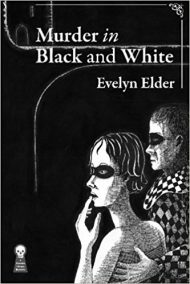 Identity and location, as I’ve said before, are really the two hooks on which a staggering majority of the detective genre hangs. And if you want to get the most out of the impossible shooting tale Murder in Black and White by Evelyn Elder — pseudonym of Detection Club alumnus Milward Kennedy — you’re going to need patience in figuring out the latter. Because while he has a good sense of character and action, as soon as anyone is required to go anywhere, or it becomes necessary to understand the internal layout of the ancient French citadel-cum-château that features so prominently, it’s as if his narrative powers desert him and he’s writing with a stick of celery.
Continue reading
#227: In Defence of Rules – A Possibly Pointless Paean
A variety of events in my actual, I’m-a-real-person life — the culmination of which was a discussion about the perceived inferiority of genre fiction because of its hidebound nature — has got me reflecting on the deployment of rules, conventions, tropes, expectations, and other norms in detective fiction, and I thought I’d share it here in case anyone was interested (I mean, that’s all I’ve done so far with this blog, and it seems to be going well…).
Continue reading
#226: Spoiler Warning 2 – Death on the Nile (1937) by Agatha Christie vs. He Who Whispers (1946) by John Dickson Carr
In the second of my semi-occasional series where caution is thrown to the wind when it comes to naming names, we are here today to discuss the two finest detective novelists of all time at their popular peak. Christie aficionado, good friend, and best teacher ever Brad of AhSweetMysteryBlog kindly agreed to go head-to-head over our favourite authors and then exchange some thoughts on aspects of the precise details and workings of the books, and the results of our efforts are below. Suffice to say, if you click to read more of this, there are guaranteed massive spoilers from this point on; don’t say I didn’t warn you.
Continue reading
#225: Rain Dogs (2015) by Adrian McKinty
 Here’s a poser for you: a woman’s body found in a castle, but the castle was searched before it was locked up for the night and she wasn’t there, and she could not have gotten in afterwards thanks to a combination of the partially-surrounding sea, a two-ton portcullis, and CCTV coverage. If it’s suicide, how did she get in? And if it’s murder, how did the murderer get in and out? No secret passages, no hidden rooms…howdunnit? After some misgivings about Adrian McKinty, I’m proving myself an actual adult by giving this impossible crime of his, set in 1987’s Northern Ireland amidst the sectarian upheaval most commonly referred to as ‘The Troubles’, a go. So, how did we do?
Continue reading
#224: Coming Soon – Death on the Nile (1937) vs. He Who Whispers (1946): Some (Optional) Pre-Reading…

As Brad and I gear up for the comparison of what you — yes, you — decreed the very best individual novels by Agatha Christie and John Dickson Carr, I thought you may appreciate a bit of reading to get in the appropriate frame of mind (besides the books themselves, I mean…).
Continue reading
#223: A Study in Contrasts – Case Closed (a.k.a. Detective Conan) Volumes 11 and 12 (1996) by Gosho Aoyama

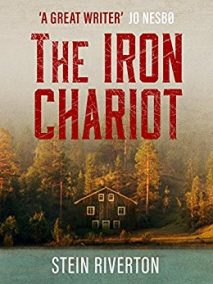 High summer, and a resident of an island tourist hotspot is found with the back of his head beaten in. The famous detective Asbjørn Krag is summoned, and as he attempts to solve the mystery of the murder we are taken into his confidence through the eyes of a nameless holiday-maker. Shenanigans, naturally, ensue. In many ways — some of which we’ll get to later — this is an archetypal GAD novel of crime and detection, but since we’re a good decade short of the form’s beginning we’re going to diverge from the expected tropes on more than a few occasions. Think of it as a piece of atmosphere with detective story interruptions for best results.
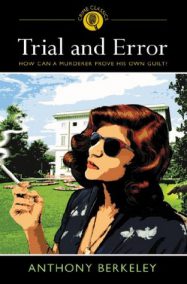 What’s in a name? When you’re dealing with GAD authors, quite a lot, which is why I’ve read 71 books by Agatha Christie but have yet to pick up any by Mary Westmacott, or why so much attention is paid to the four books Barnaby Ross published in his two-year career. So when I say this Anthony Berkeley novel would be far better were it by Frances Iles, you will hopefully appreciate my point. I thought it worth looking at the genre’s arch convention-challenger — one of the

