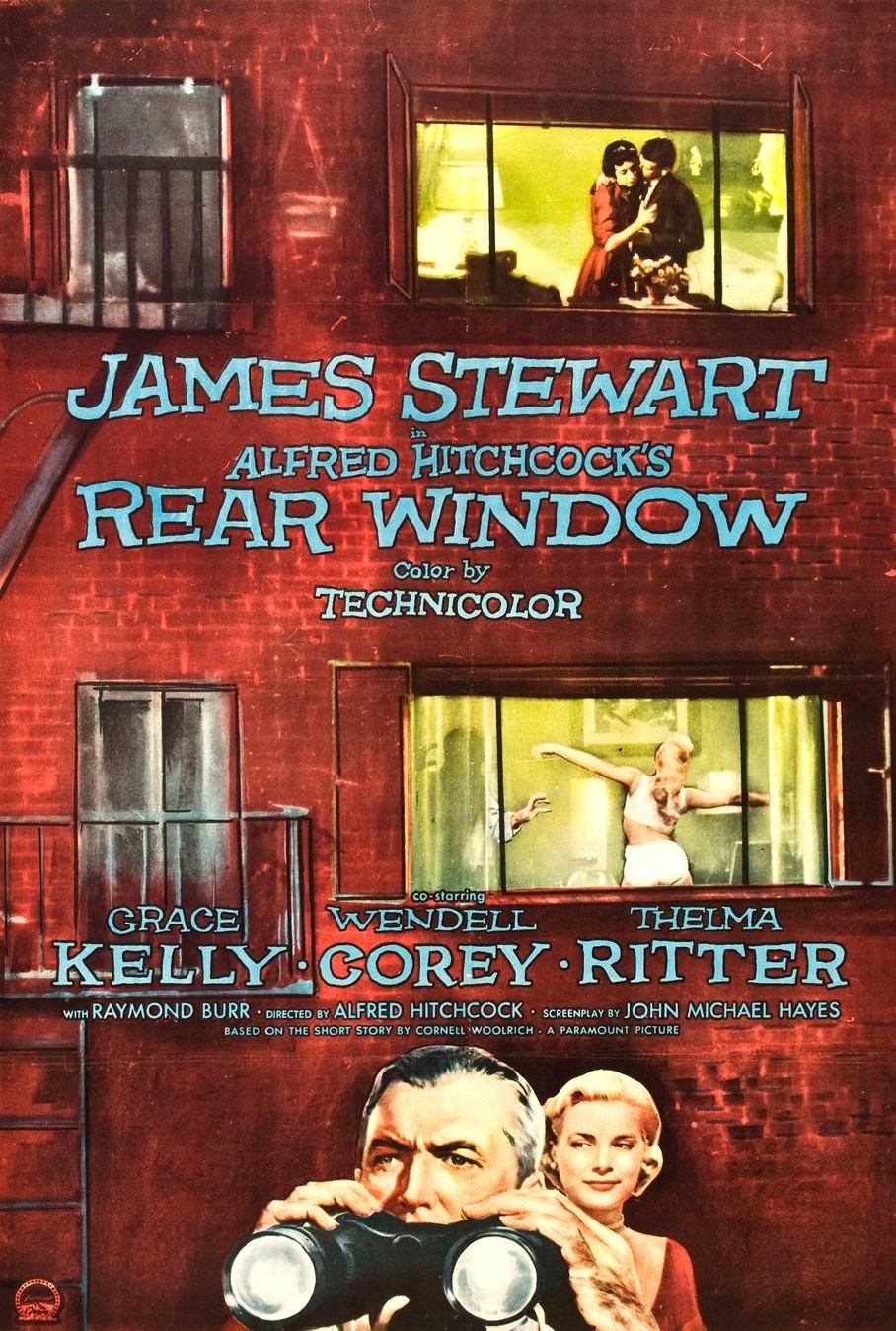
I started watching Alfred Hitchcock’s films when I was probably 12 or 13, too young to appreciate their style but old enough to know when they slipped by in a blur of fun and excitement. And yet when I first watched Rear Window (1954) there was a sense of something special having just happened, something I didn’t really appreciate until I rewatched it a few years later.
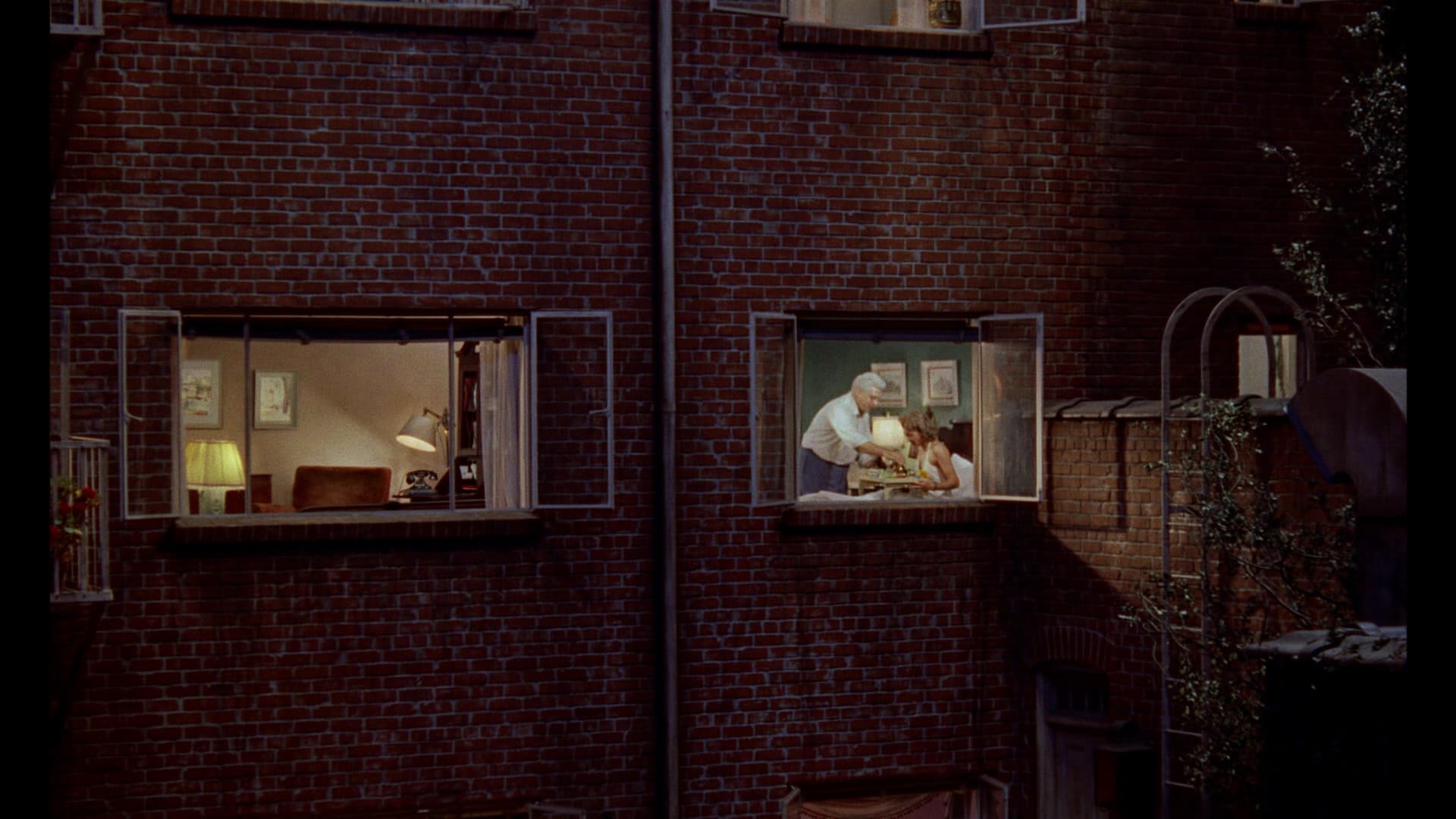
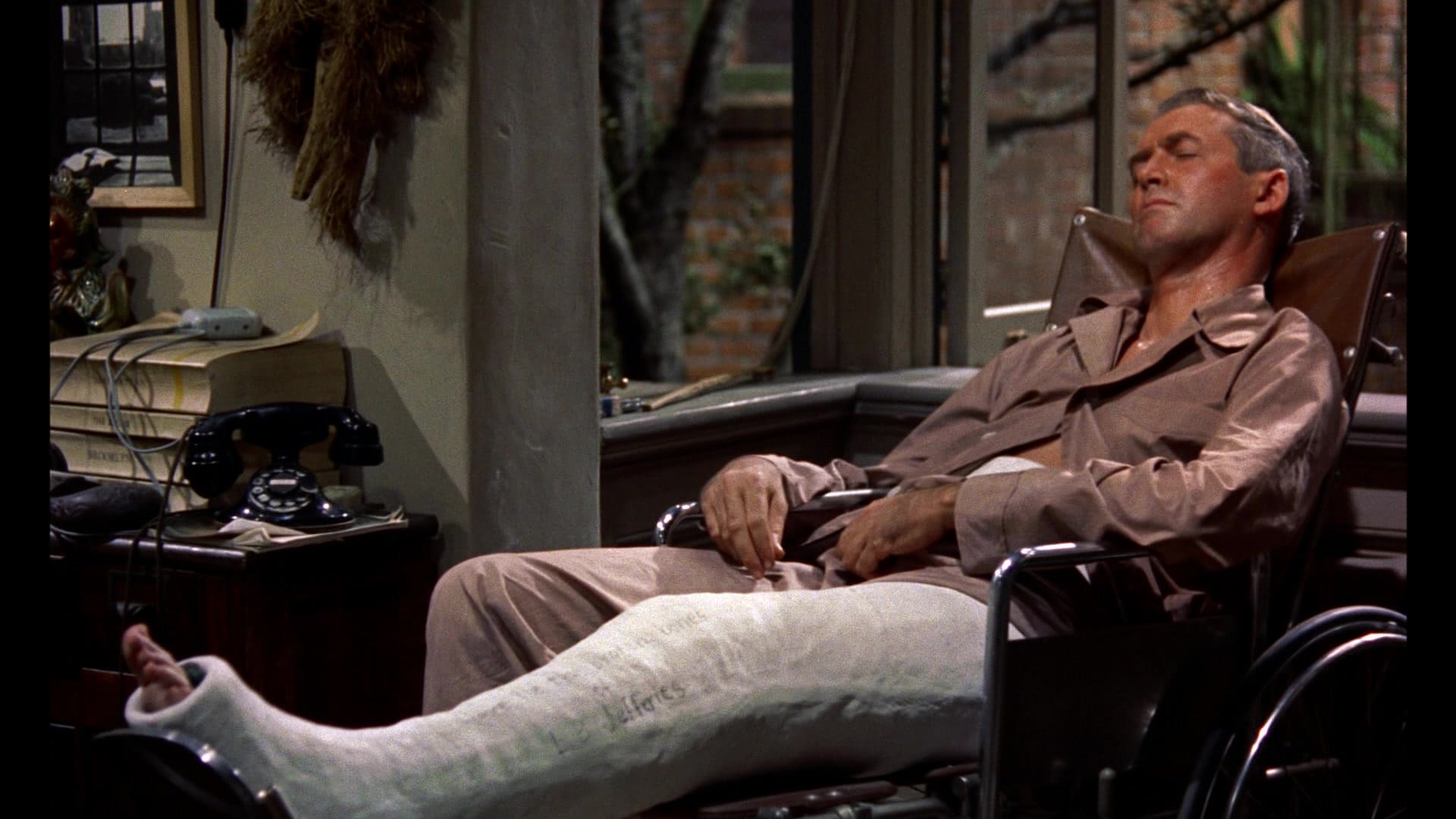
After Hitchcock’s roving camera gives us a neighbourhood baking in a hot summer, we meet the wheelchair-bound L.B. ‘Jeff’ Jefferies (James Stewart), in the final week of confinement before the cast on his broken leg is removed. Clearly he has spent the previous six weeks increasingly frustrated by inaction and increasingly interested by the people he can see from his window. Their various relationships — the antagonism between salesman Lars Thorwald (Raymond Burr) and his wife (Irene Winston), the suitors of dancer Miss Torso (Georgine Darcy) rendering her “like a queen bee with her pick of the drones”, the happy newlyweds (Havis Davenport and Rand Harper) who have moved in nearby — unfold gradually, through not-quite-overheard dialogue and some wonderfully demonstrative mime acting that hits just the right note of naturalism without ever being so subtle as to evade purpose.
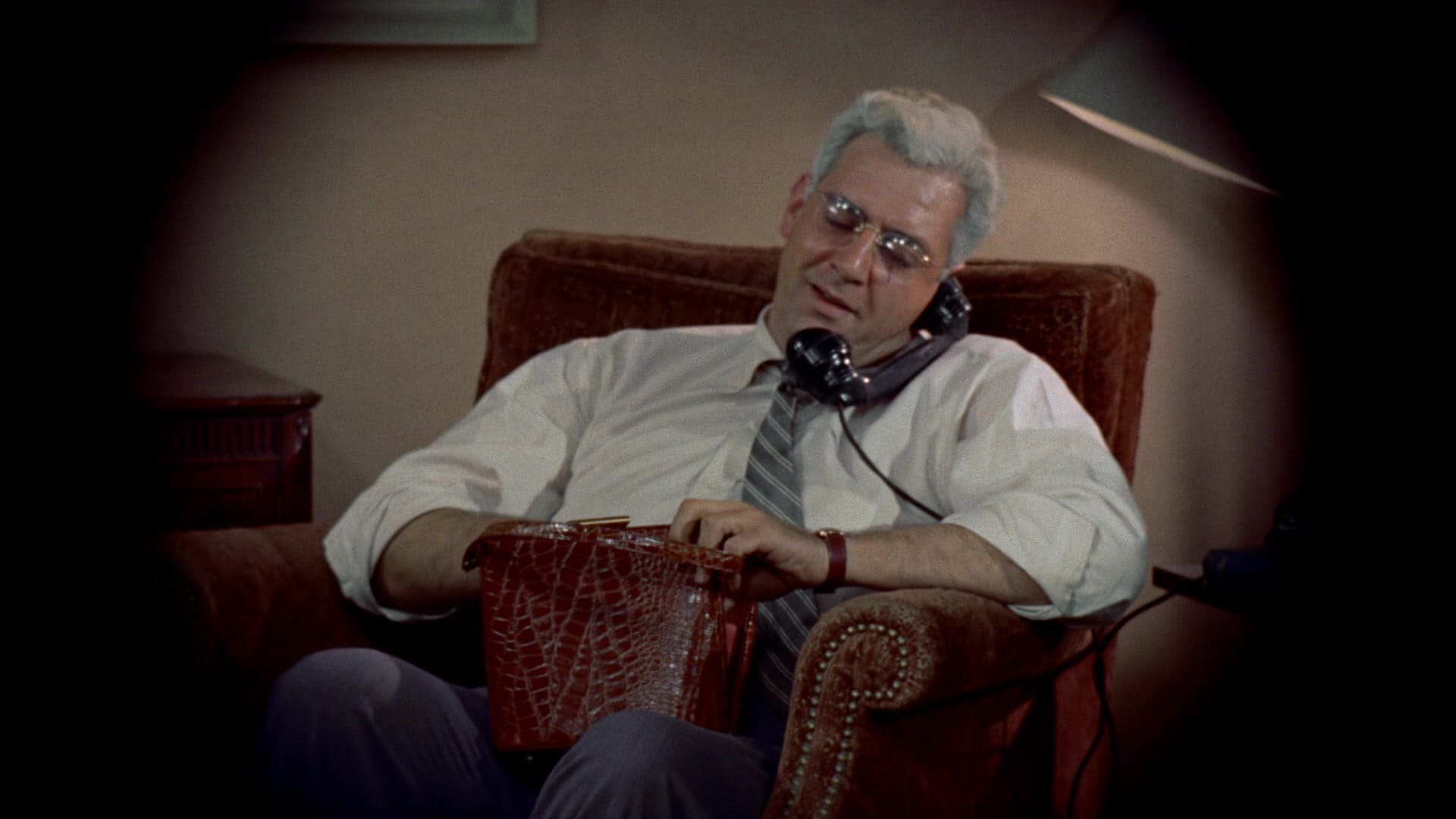
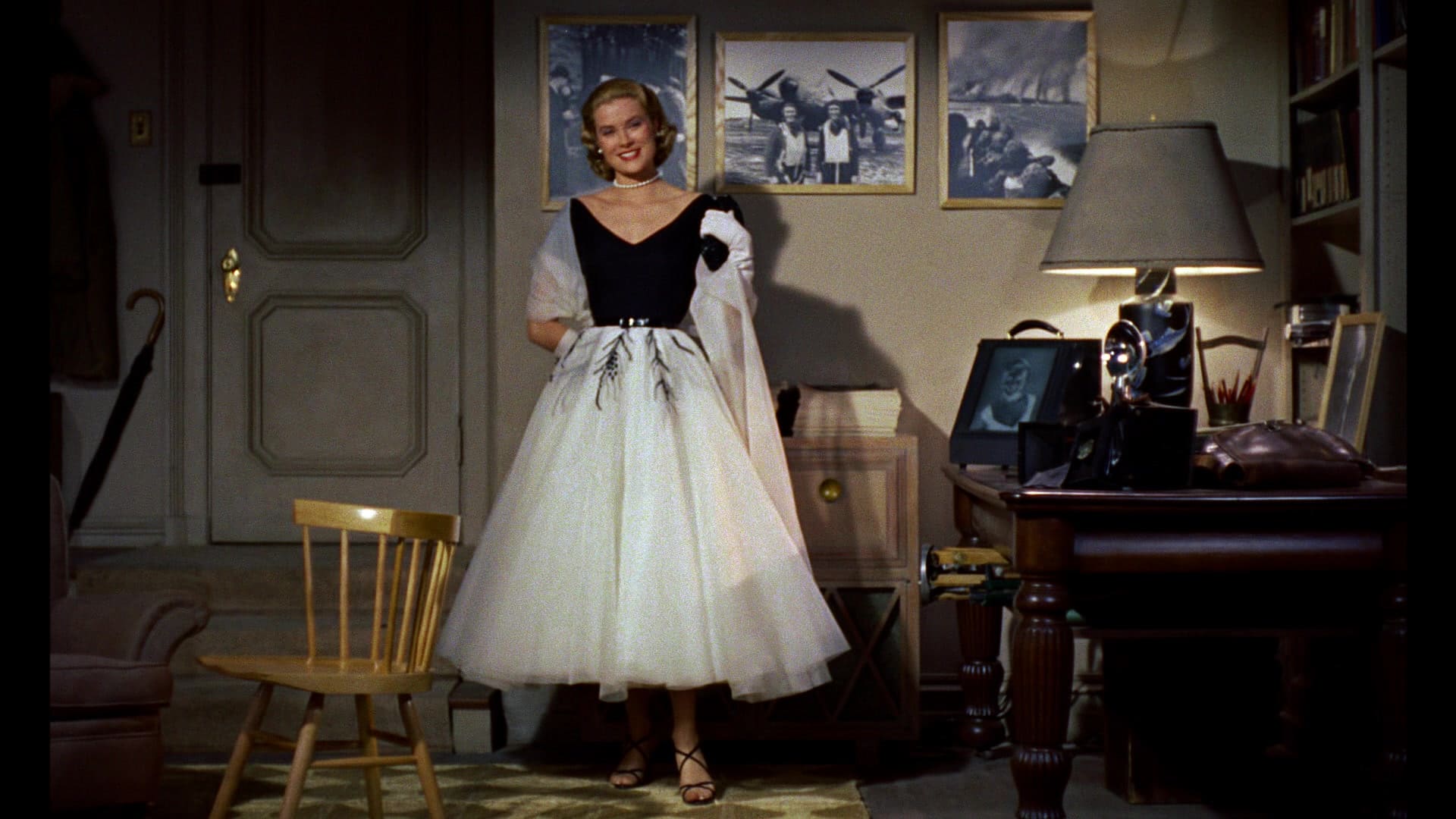
John Michael Hayes’s script, adapting Cornell Woolrich’s story ‘It Had to be Murder’ (1942), sets up some lovely contrasts: Jeff on the phone to his editor lamenting the trappings of inevitably-unhappy marriages (“In my neighbourhood [wives] still nag.”) as the Thorwalds argue, or Jeff and socialite Lisa Fremont (Grace Kelly) lightly-but-pointedly jousting over the possibilities of their shared future swiftly followed by Miss Lonelyhearts (Judith Evelyn) acting out a purely imagined date before collapsing in tears. Sure, Jeff seems like a discontented grouch when he can’t get excited about having Grace Kelly fawning over him (“It’s perfect. As always.”), but the various threads and themes are sewn so neatly into this opening sally that you almost forget you’re watching a film in the midst of all these different slices of life so tightly and ignorantly pressed up against each other.
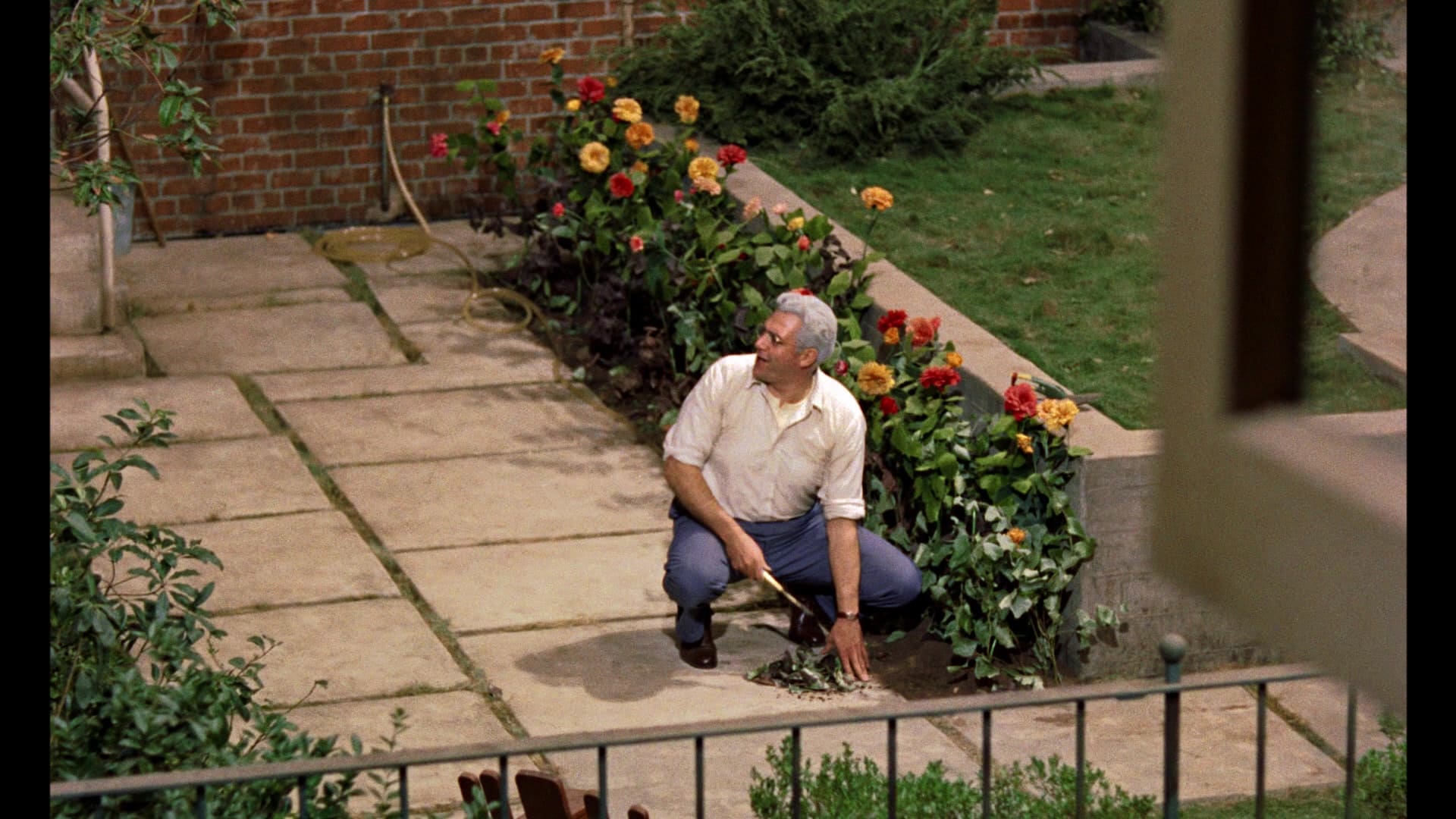
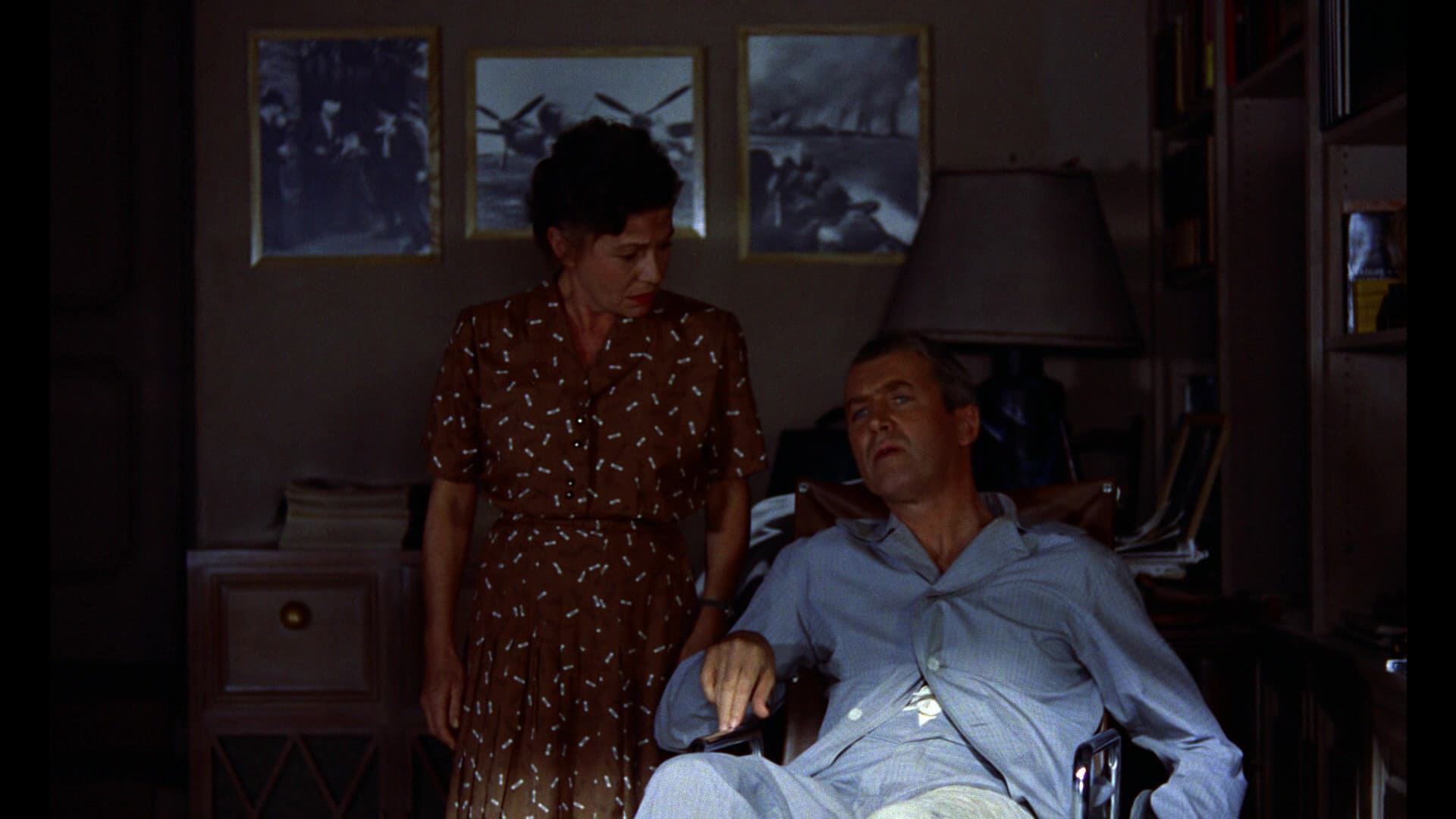
Even as the plot advances — a scream, a smashing of glass — the notion that there’s more than simply one thread going on here is well-maintained. Lars Thorwald goes out in the rain at an odd hour, the couple sleeping on their balcony (Sarah Berner and Frank Cady) get caught in the rain, the songwriter (Ross Bagdasarian) who lives nearby stumbles home drunk and angry. Precisely what you’re supposed to follow, and whether these events exist in isolation or, as decades of mystery mongering has taught us, whether some as-yet-unseen thread exists between them remains tantalisingly up in the air. And yet, and yet…the voice of reason is supplied by Stella (Thelma Ritter), the insurance company nurse who visits Jeff daily and pours gentle scorn on his various preoccupations.
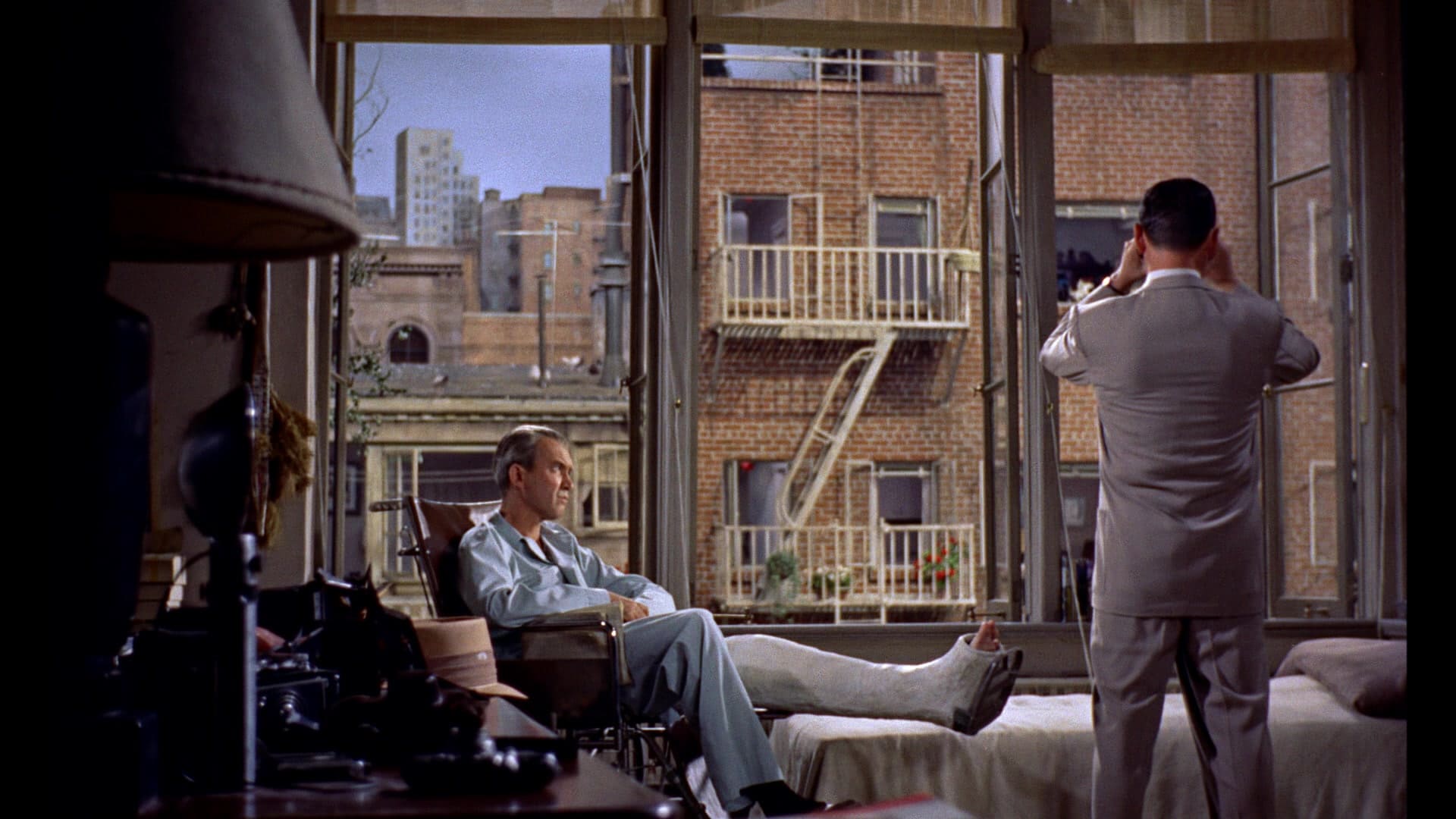
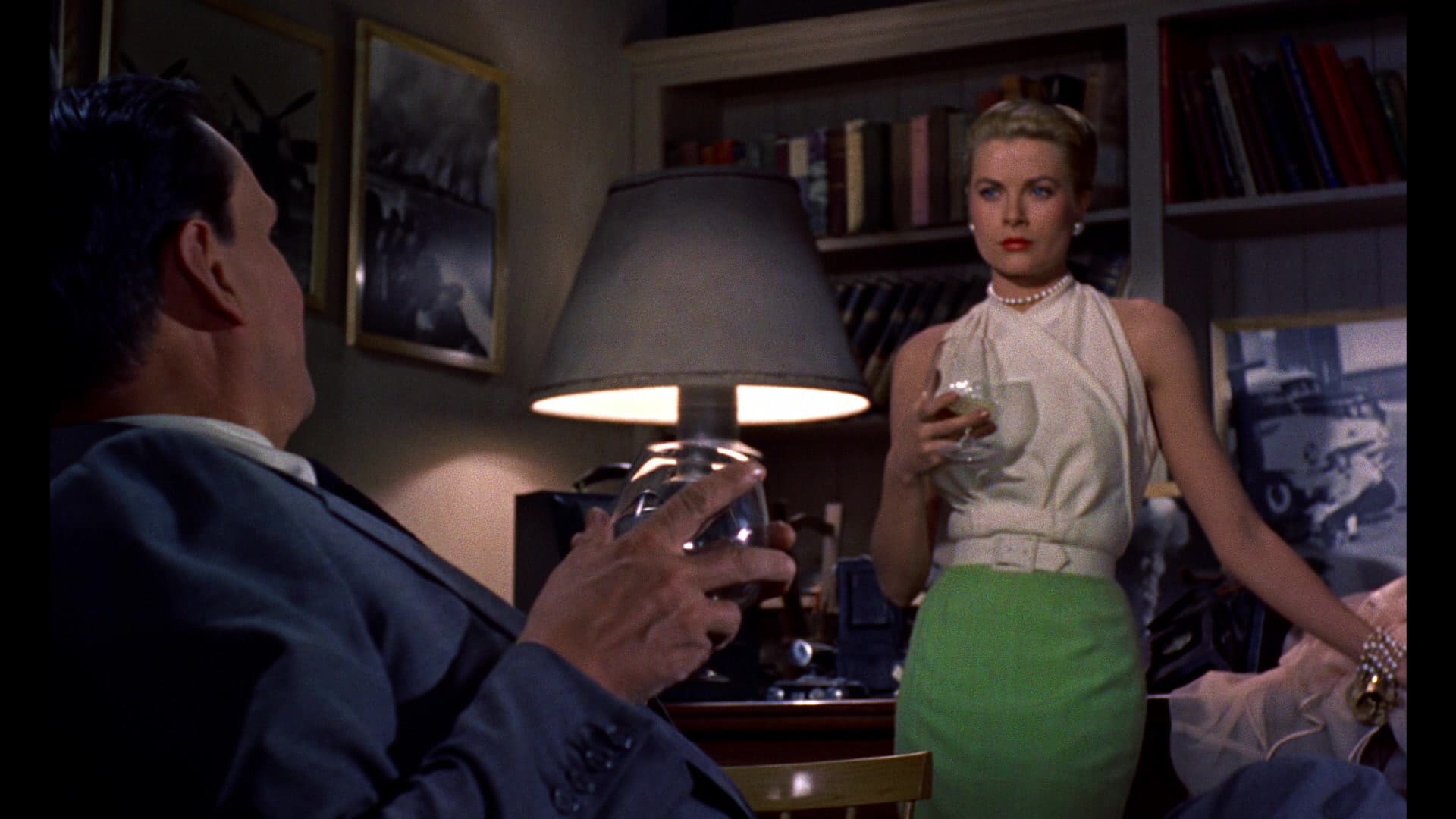
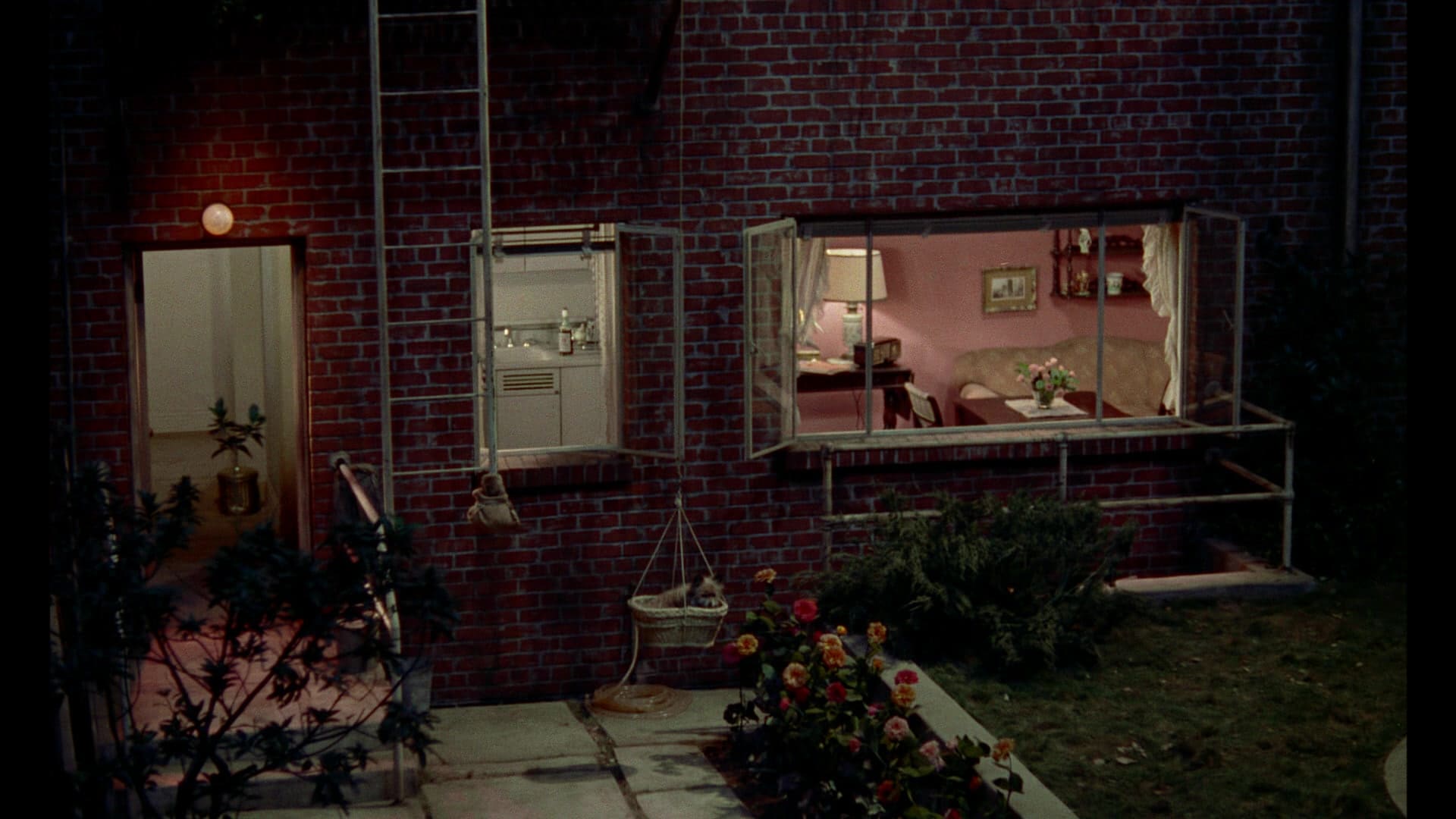
Stewart is, of course, sublime, with that trademark slurred delivery (“It’s just another run-of-the-mill Wednesday. The calendar’s full of ’em.”) put to wonderful use, investing Jeff with an air of concern and longing that the dialogue alone would fail to imply in lesser hands (or, well, a lesser mouth, I suppose). And as he slowly seems to unravel (“Just how long would it take to cut up a human body?”) the use of light and shade is brilliant, with the increasingly-obsessed Jeff rendered in more and more shadowy backgrounds as the apparently blameless people around him live out their lives in the full glare of raised blinds and well-lit spaces. It’s here that the superbly-constructed set really shines, allowing the camera to tell so much of the story and instil so much doubt in the audience without the need to utter a word. For a man whose career was often built in startling imagery — a crop-dusting plane getting ominously closer, a shadow on a shower curtain — it’s wonderful to see Hitchcock embrace purely visual storytelling at times here, recognising that for all the power of the unexpected, it’s often the dullest and most quotidian of events, like a man and a woman leaving an apartment as Jeff dozes, unaware, that can form the basis of the greatest suspense.
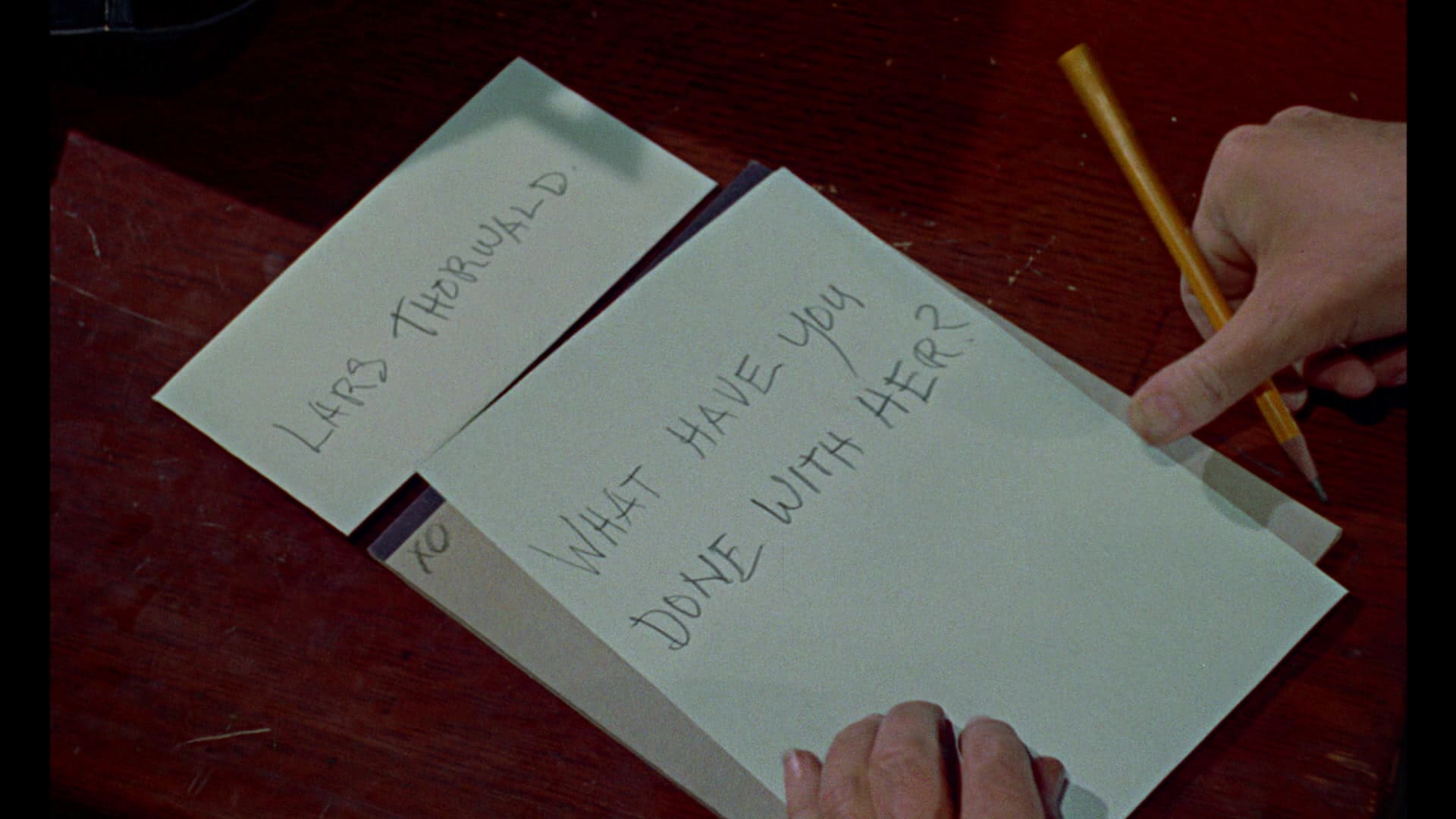
The casting of Burr here is a real masterstroke, too. We’re still a few years away from him becoming known as the defender of the innocent in various Perry Mason TV episodes and films, but the sheer ominous physicality of the man is perfectly weighted for a potential murderer who might yet turn out to be completely innocent. It’s going to sound weird, but when this was loosely remade as the teen-focussed, Shia Labeouf-starring Disturbia (2007), they cast the role perfectly then, too, with the underappreciated David Morse doing an equally magnificent job of walking the line in a way that completely makes that movie work. It helps that Hitchcock finds many ways for the apparently normal to seem ominous — the glowing cigar end in a darkened room is inspired — and keeps you so up in the air. Can you have a murder mystery without a murder? It’s almost Anthony Berkeleyan in its ingenuity.
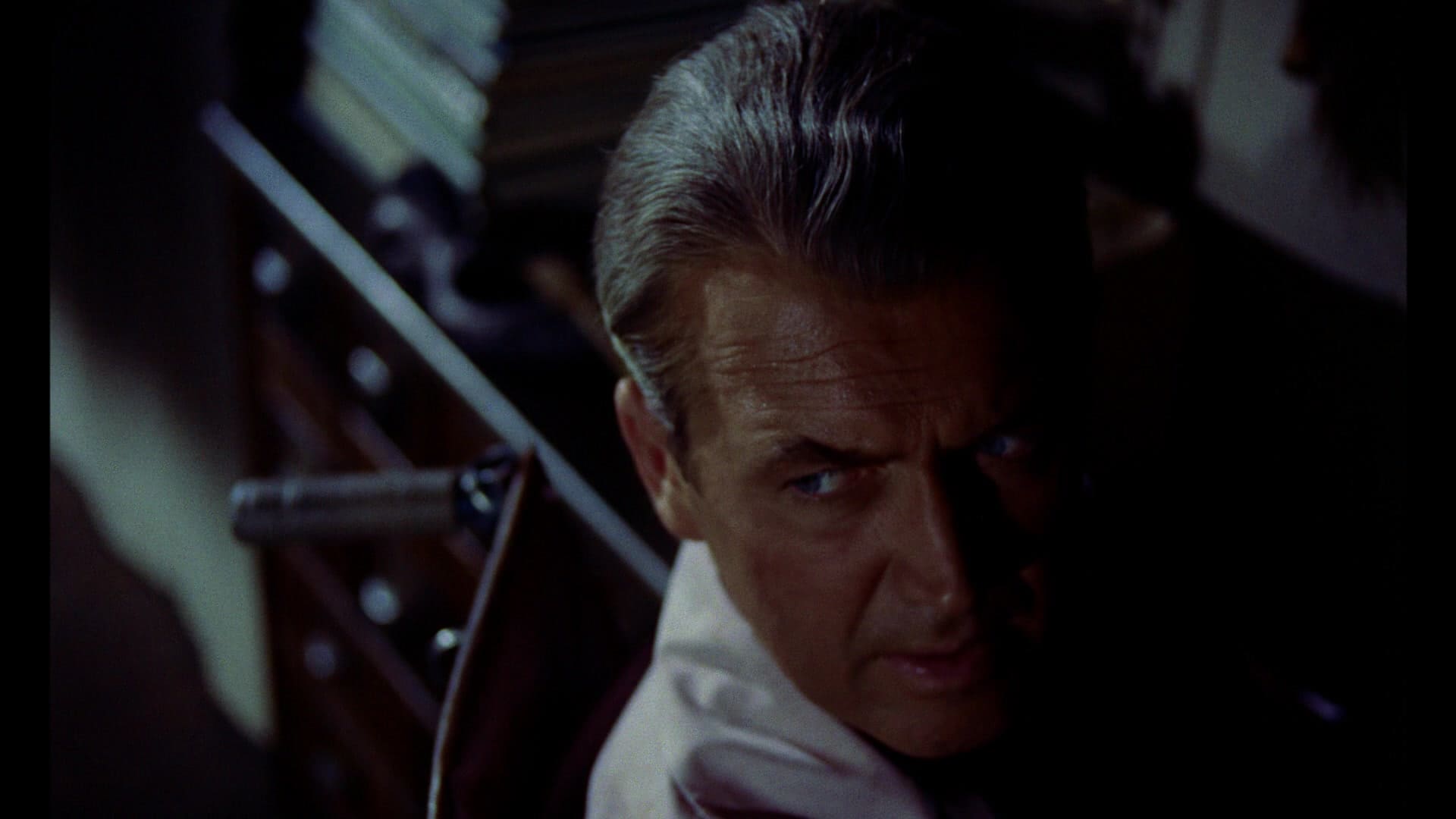
As the contradictions pile up and the objections increasingly close to home (“Do you tell your landlord everything?”), it’s only a matter of time before these events, held so long at arm’s length, end up rather closer than is strictly comfortable. The final ten minutes are exquisite, with the shot of the two women standing in their respective windows as Thorwald returns probably one of the great under-valued constructions in Hitch’s oeuvre, along with the moment Burr turns to look straight at the camera — damn, that still gives me shivers. Long takes, slow zooms…this is heaven, and the final tracking shot shows you just how invested you’ve become in these unknown people, a testament to the core humanity we have experienced through watching them live the love, despair, and everything in between that so many of us experience on a daily basis.
Hitchcock would delve more deeply into the obsessive element of a fixated protagonist four years later with Vertigo (1958), for which this almost feels like a test run at times. As it stands, Rear Window is spectacularly mature, unshowy film-making of the sort that often has the over-used compliment ‘masterpiece’ thrown at it far too often. And yet in an age where true auteurs are rare, and where the cinema experience is becoming increasingly uncommon, it really is difficult not to watch this and lament that they don’t make ’em like they used to.
~
The film stills accompanying this review are all taken from FanCaps.net.
 The Invisible Event