- Comment
-
Subscribe
Subscribed
Already have a WordPress.com account? Log in now.
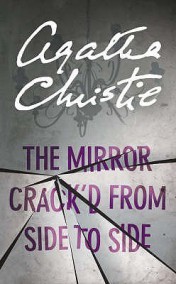 “Write what you know” is the kind of aphorism doled out to aspiring authors like public money at a bank’s board meeting, and aged 72 Agatha Christie – world’s biggest-selling author of crime fiction, with a West End play entering its eleventh consecutive year – knew a lot about being old and a lot about crime. So is it any surprise that this return to crime-solving elderly spinster Miss Jane Marple is so damn good? It’s the first Miss Marple book to actually feature the wily old fox with any regularity since They Do it with Mirrors (1952) as she only really put in a cameo in both A Pocket Full of Rye (1953) and 4:50 from Paddington (1957). Of the 16 books Christie would publish from this until her death six of them would feature Marple, composing practically half of the canon, and arguably a familiarity with her subject helped; it’s an impression reinforced by the opening pages of The Mirror Crack’d… wherein the indignities of old age are charmingly laid out from Aunt Jane’s perspective and you can almost see Christie winking at you while she writes.
 The Invisible Event
Great review! Has been a couple of years since I’ve read a Miss Marple, though she is one of my favourite fictional detectives. I think The Murder at the Vicarage and Nemesis are the my favourite Miss Marple novels. I always wished there had been more Miss Marple novels.
LikeLike
Many thanks! My favourite Marple to date – The Moving Finger – actually frustrates me a little in the way she is parachuted in to provide the solution at the end. It’s a truly fantastic mystery and a fabulous novel, however, so I have to wrap my head around it being my favourite Marple in spite of the Marple element not necessarily being to my liking. Sometimes I worry I think about these things too much… Great to know there are still some good ones to come, too, and, yeah, there really aren’t enough of them (not that anyone should take this as incitement for a “celebrity author continuance”…unless Anthony Horowitz is interested…)
LikeLike
yeah that did bother me too when I read The Moving Finger. Not sure a new author continuing the Miss Marple canon would meet up to my expectations. I don’t tend to enjoy those type of books which are a continuation of another author’s series. The only exception to rule for me is probably Jill Paton Walsh and her Lord Peter Wimsey novels, but I think that’s because I read them a while after the original novels and because I am less attached to LPW as a character.
LikeLiked by 1 person
Shall stop playing blog-chase after this (apologies!), but am with you on the continuations. Horowitz’s Holmes universe books are far and away the best of anything in that vein, but much like you I’m aided by a lesser attachment to the later Holmes canon. That said, so much else in terms of Holmes pastiche is just awful, so anything even half decent is going to stand out.
LikeLiked by 1 person
Yes Holmes has definitely been over-pastiched now.
LikeLiked by 1 person
Pingback: #74: “Old people know how valuable life is, and how interesting…”, portrayals of age in Agatha Christie’s A Caribbean Mystery (1964) | The Invisible Event
Pingback: #83: “One gets to remembering things in a place like this…” – a meta-analysis of Agatha Christie’s At Bertram’s Hotel (1965) | The Invisible Event
Pingback: #125: A Sudden Flush of Youth (or Two) in Agatha Christie’s Endless Night (1967) | The Invisible Event